
OEM vs ODM vs Private Label Mattress: What Buyers Should Know
OEM, ODM and private label are often used to describe different mattress sourcing and product-development approaches, but the terms can overlap in real supplier relationships. Buyers should understand who defines the product, what can be customized, how branding is handled and how samples move into bulk production before choosing a cooperation model.
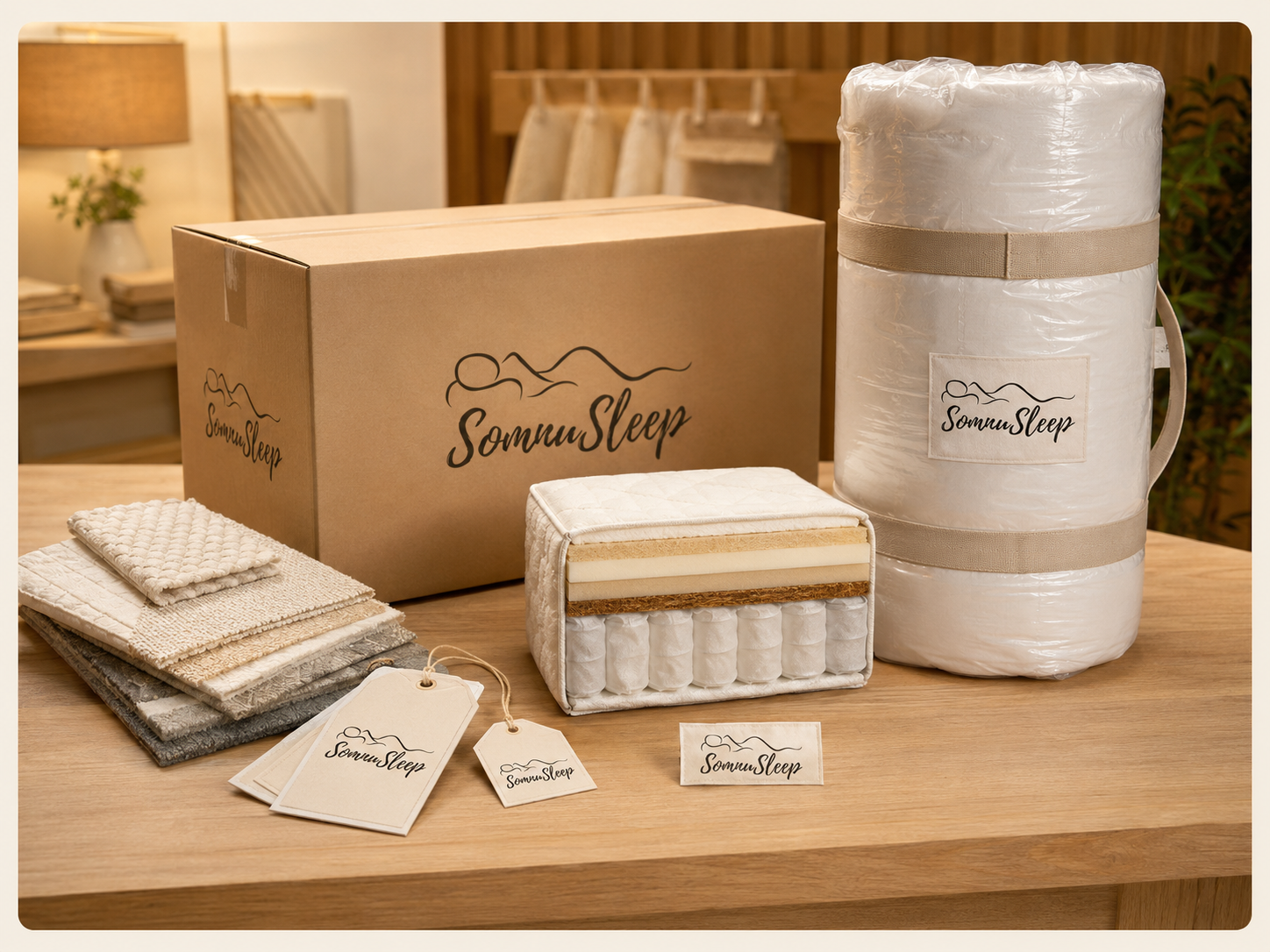
OEM, ODM and Private Label Are Not Always Three Separate Models
OEM and ODM generally describe how product design and manufacturing responsibilities are divided between the buyer and the manufacturer. Private label, however, more often describes how the finished mattress is branded and sold under the buyer’s own name.
In practice, these approaches can overlap. A buyer may start from a manufacturer-developed mattress, customize the firmness, fabric, height, labels and packaging, and then sell the finished product under its own brand. The important point is to confirm who defines the specification, what can be customized and how the approved product will move into bulk production.
Key takeaway: Do not choose a supplier based only on whether it uses the terms OEM, ODM or private label. Compare the actual development responsibility, customization scope and approval process.
1. What Do OEM, ODM and Private Label Mean in Mattress Manufacturing?
The exact meaning of OEM, ODM and private label can vary between manufacturers, but the terms are useful for understanding who provides the starting product specification, how much development work is required and how the finished mattress is branded.
What Is an OEM Mattress?
In an OEM-style project, the buyer usually provides more of the target product requirements or specification. This may include mattress construction, firmness, height, materials, dimensions, fabric, branding and packaging requirements.
What Is an ODM Mattress?
In an ODM-style project, the manufacturer typically provides an existing product platform or design as the starting point. The buyer may then adjust selected features such as firmness, height, fabric, labeling or packaging for its target market.
What Does Private Label Mean?
Private label focuses on selling the finished mattress under the buyer’s own brand. The product may start from an existing design or a customized specification, so private label can overlap with either OEM- or ODM-style development.
2. OEM vs ODM vs Private Label Mattress: Key Differences
The main difference is not simply the name of the cooperation model, but where the product starts, who defines the specification and how much development and branding work is required.
Important: These are general purchasing patterns, not fixed industry rules. Actual OEM, ODM and private-label arrangements vary by manufacturer and project, so buyers should confirm responsibilities, customization scope and approval requirements before development begins.
3. When Should Buyers Choose OEM?
An OEM-style project is often more suitable when the buyer already has a clear idea of the mattress it wants to develop. This may include defined requirements for construction, firmness, height, materials, dimensions, fabric, branding or packaging.
The more specific the product requirements are, the more important it becomes to document the specification clearly and confirm it through sample approval before bulk production.
OEM may be suitable when you already know:
Key takeaway: OEM is usually a better fit when the buyer wants more control over the final specification rather than simply selecting an existing mattress and changing the branding.
4. When Does ODM Make More Sense?
An ODM-style project may be more practical when the buyer wants to start from an existing mattress platform instead of developing the entire product from the beginning. The manufacturer provides the initial construction or product concept, while the buyer selects which elements should be adjusted for its market.
Depending on the project, buyers may still customize firmness, mattress height, fabric, quilting, labels, branding or packaging. The key is to confirm which parts of the original design can be changed before sample development begins.
ODM can provide a practical starting point when:
Key takeaway: ODM can reduce the amount of product development required at the starting stage, but buyers should still confirm the final specification, customization scope and sample approval process.
5. Where Does Private Label Fit?
Private label describes how the finished mattress is presented and sold under the buyer’s own brand. It does not necessarily define who created the original mattress design, which is why private-label projects can overlap with either OEM- or ODM-style development.
A buyer may start from an existing mattress platform, customize selected specifications and then add its own fabric choices, labels, logo and packaging. Another buyer may develop a more customized mattress specification from the beginning and still sell the final product under its own private label.
Product Specification
The mattress may use an existing platform or a buyer-defined specification, depending on the required construction, firmness, height, size and comfort positioning.
Brand Presentation
Private-label projects may include selected fabrics, quilting patterns, logos, woven labels, side labels and other product-identification details.
Packaging
Packaging can be coordinated with the buyer’s sales channel, shipping method and brand presentation, including cartons, labels and suitable compression options.
Buyers planning their own branded collection can review SomnuSleep’s mattress customization and private-label options before defining the final specification.
6. What Can Be Customized in an OEM or Private-Label Mattress Project?
Customization should be defined around the product requirements and target market rather than treated as a list of optional features. Buyers should decide which elements affect the mattress specification, brand presentation and final delivery requirements.
The available scope will vary by manufacturer and project, so each item should be confirmed during specification development and sample approval.
Mattress Construction
Define the support system and comfort-layer structure according to the target market and product positioning.
Firmness & Comfort
Confirm the required comfort profile, firmness direction and any layer adjustments before sample development.
Size & Height
Confirm mattress dimensions and finished height based on the target market, bed system or project requirements.
Fabric & Quilting
Select cover materials, fabric appearance and quilting details that match the product positioning and brand direction.
Branding & Labels
Define the required logo, woven label, side label and other product-identification details for the finished mattress.
Packaging
Confirm packaging according to shipping, storage, sales-channel and project-handling requirements for the finished mattress.
7. From Product Idea to Bulk Production
OEM and private-label mattress projects usually move through a series of specification, sampling and approval stages before bulk production. The exact process can vary by project, but each stage should be clearly confirmed before moving forward.
Define Requirements
Confirm the target market, product positioning and overall mattress direction.
Confirm Specification
Define construction, firmness, size, height, fabric, branding and packaging.
Develop the Sample
Produce and review a mattress sample against the agreed product requirements.
Approve the Product
Confirm the final sample and record the approved product specification.
Move to Production
Transfer the approved specification into bulk production and packaging.
Buyers evaluating how approved specifications move into production can also review SomnuSleep’s factory and production capabilities.
8. How to Evaluate a Mattress Manufacturer’s Customization Capability
A manufacturer’s customization capability should be evaluated by how clearly it can translate buyer requirements into an approved product specification and then reproduce that specification consistently.
Buyers should look beyond the number of options offered and check how product details, samples, branding, packaging and specification changes are managed throughout the project.
For a broader supplier evaluation framework, read How to Choose a Mattress Manufacturer for Wholesale & OEM Orders.
Specification Control
Confirm product specifications are clearly recorded before sampling.
Sample Consistency
Confirm the approved sample is followed during repeat production.
Material & Branding
Check fabrics, quilting, labels and logos before production.
Packaging Coordination
Confirm packaging fits shipping, storage and sales-channel needs.
Change Control
Record specification changes clearly before sampling or bulk production.
9. Questions to Confirm Before an OEM or Private-Label Project
Before sample development begins, buyers should confirm the responsibilities, customization scope and approval process for the project. Clear answers at this stage can reduce specification changes later.
Who Defines the Product Specification?
Confirm whether the buyer, manufacturer or both parties will define the mattress construction and final product requirements.
What Can Be Customized?
Confirm which elements can be changed, including firmness, height, fabric, quilting, branding and packaging.
How Is the Sample Approved?
Agree on how the final sample and approved specification will be recorded before bulk production.
How Should MOQ Be Understood?
MOQ can depend on the construction, materials, fabric, packaging and customization requirements of the project.
Who Controls Branding & Packaging?
Confirm the required logos, labels, product information and packaging details before production.
How Are Specification Changes Managed?
Confirm how revisions are recorded so the latest approved requirements are used for sampling and production.
10. OEM, ODM or Private Label: Which Approach Fits Your Project?
The right approach depends on how much of the product has already been defined, how much development support is needed and whether the main priority is product customization, speed to a starting point or brand ownership.
Choose OEM when the product specification is already well defined
OEM may be a better fit when you already know the required construction, firmness, dimensions and other product details.
Choose ODM when you want an existing product as the starting point
ODM can be useful when you want to start from an existing mattress platform and adjust selected features for your market.
Choose private label when building your own branded collection
Private label fits buyers who want the finished mattress sold under their own brand, using either an existing or customized product.
Remember: These approaches can overlap. The final cooperation model should be defined by the actual product specification, responsibilities and approval process rather than by the label alone.
Frequently Asked Questions
1. Is private label the same as OEM?
Not necessarily. Private label mainly describes selling the finished mattress under the buyer’s own brand, while OEM usually refers more to how the product specification and manufacturing responsibilities are defined. A private-label project can also use an OEM-style development process.
2. What is the difference between OEM and ODM mattresses?
OEM-style projects usually involve more buyer-defined product requirements, while ODM-style projects often begin with a manufacturer-developed product or platform that can then be adjusted for the buyer’s market.
3. Can an existing mattress design be customized for a private-label brand?
Yes, depending on the manufacturer and project. Selected elements such as firmness, height, fabric, quilting, labels, branding and packaging may be adjustable before the final sample is approved.
4. Should buyers approve a mattress sample before bulk production?
Yes. Sample approval helps confirm the final construction, dimensions, comfort, materials, appearance and branding details before the specification is transferred into bulk production.
Ready to Develop Your Mattress Collection?
Share your target market, mattress specifications, customization requirements, branding and packaging needs with our team. We can help review a suitable development approach before sampling and bulk production.