
What Is a Tight Top Mattress?
A tight top mattress has a flat, streamlined sleep surface without the raised cushioning layer found on Euro top or pillow top designs. Its feel can still range from medium to firm depending on the comfort layers, spring system, and overall construction.
This guide explains how tight top mattresses are built, how they compare with other top styles, and what buyers should check when sourcing them for retail, hospitality, or project use.
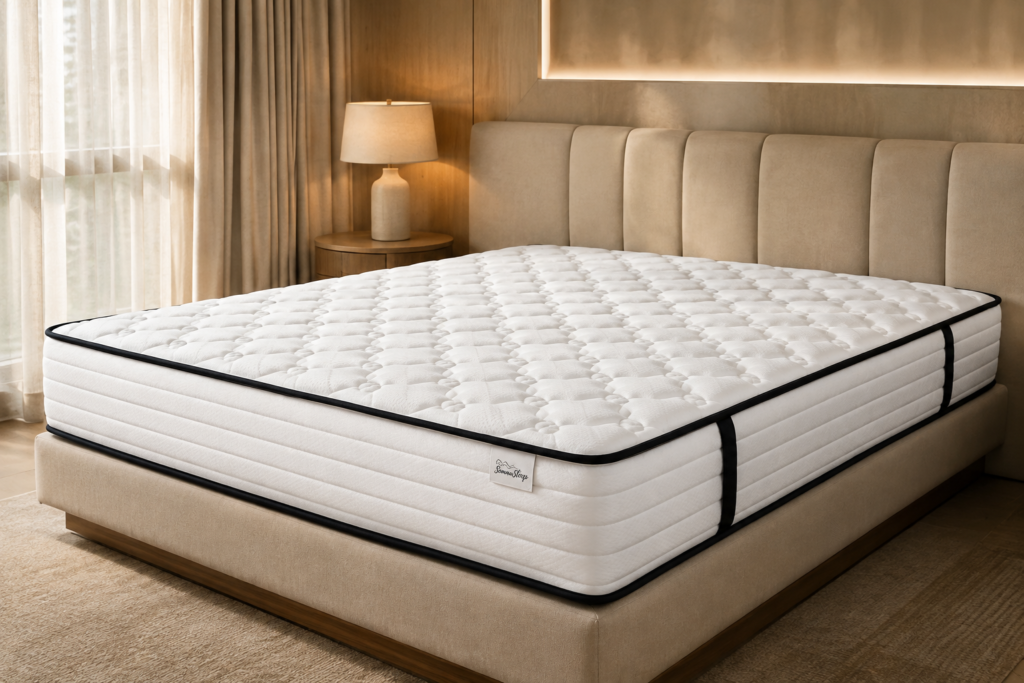
What Does “Tight Top” Mean on a Mattress?
A tight top mattress is a mattress with a flat, streamlined upper surface rather than a separate cushioned layer sewn above the main mattress body. Unlike a Euro top or pillow top design, the comfort layers are contained within the mattress construction, giving the surface a cleaner and more compact profile.
The term “tight top” describes the mattress’s top construction, not a specific firmness level. A tight top mattress can feel medium, medium-firm, or firm depending on the materials used in the comfort layers, the spring or support system, the quilting, and the overall specification.
This construction is commonly used across a wide range of mattress applications because it can be adapted to different comfort requirements, heights, materials, and target markets. For buyers comparing mattress designs, understanding the top style is only one part of evaluating the complete mattress specification.
How Is a Tight Top Mattress Constructed?
A tight top mattress is built by combining multiple layers that work together to create the desired comfort, support, and durability. Although the surface appears simple and flat, the internal construction can include different materials, spring systems, and comfort components depending on the target market and application, and specific tight top mattress designs.
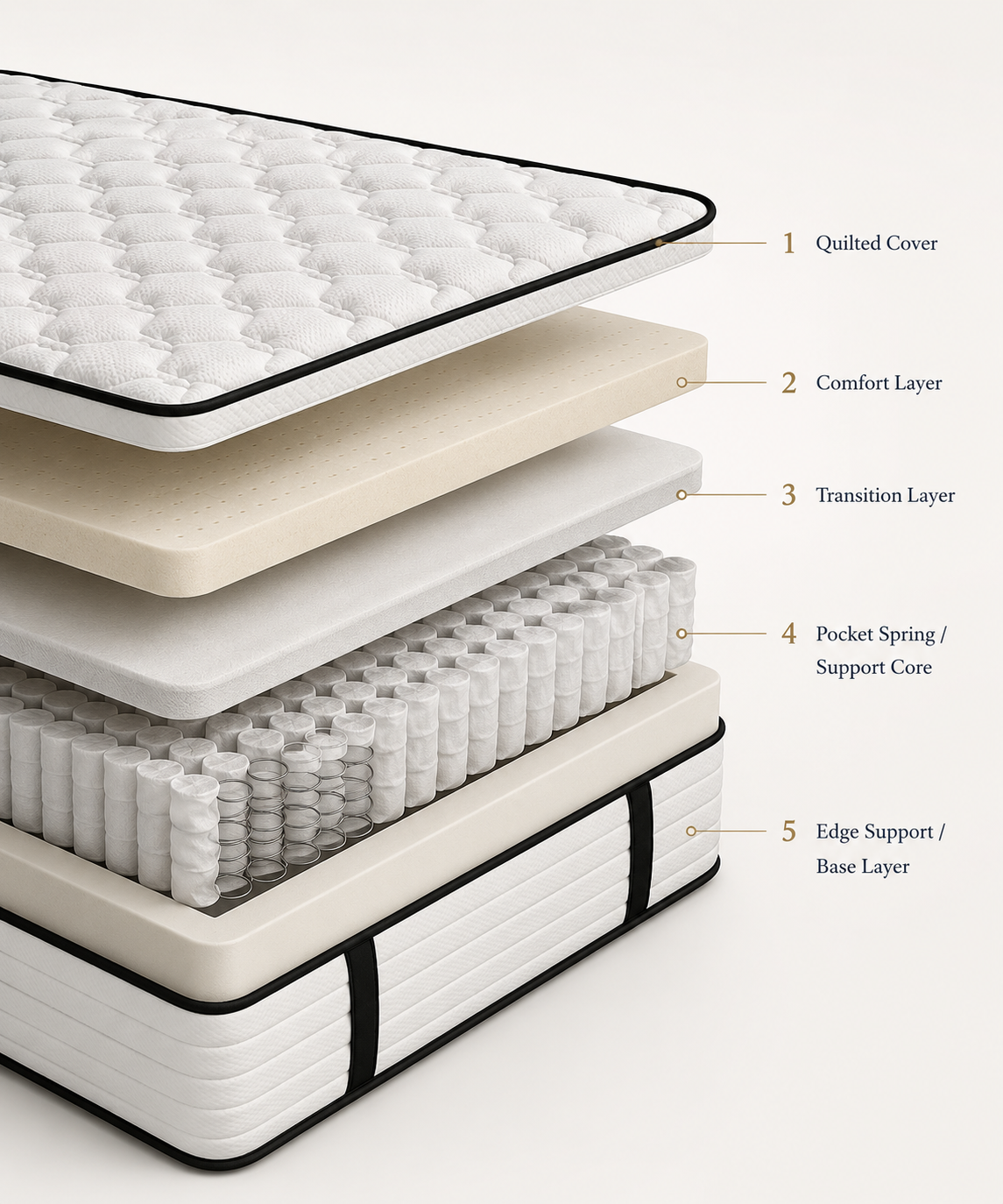
01 Quilted Cover
The quilted cover is the top layer that creates the mattress surface appearance and initial comfort feel. Fabric selection, quilting pattern, and padding materials can influence both aesthetics and the overall sleeping experience.
02 Comfort Layers
Comfort layers are placed beneath the cover to provide cushioning and pressure distribution. Depending on the specification, manufacturers may use different foam types, fiber layers, or other comfort materials to achieve the required feel.
03 Pocket Spring / Support Core
The support core provides the main structural foundation of the mattress. Pocket springs, innerspring systems, or other support technologies can be combined with the comfort layers to achieve different levels of support and durability.
04 Edge Support
Edge support helps maintain mattress stability and usable sleeping space. The construction method depends on the mattress design, specifications, and intended application.
Tight Top vs Euro Top vs Pillow Top Mattress: Key Differences
When comparing mattress constructions, the main difference between tight top, Euro top, and pillow top designs is how the comfort layers are integrated with the support system.
Each construction style can be customized with different materials, spring systems, and comfort levels for retail, hospitality, and project applications.
A tight top mattress features a flat sleep surface with comfort layers built directly into the mattress construction.
It offers a clean profile and flexible options for retail, hospitality, and customized projects.
Best for:
Retail collections, hospitality projects, and customized specifications
A Euro top mattress includes an additional comfort layer sewn beneath the side panel for a more integrated appearance.
It provides balanced cushioning while maintaining a structured mattress profile.
Best for:
Balanced comfort with a structured premium feel
A pillow top mattress adds a separate plush cushioning layer above the mattress surface.
It creates a softer initial feel with a more noticeable comfort layer.
Best for:
Plush comfort-focused mattress designs
Does a Tight Top Mattress Always Feel Firm?
No. A tight top mattress does not automatically mean a firm mattress. “Tight top” describes how the upper surface of the mattress is constructed, while firmness depends on the materials and support system used inside the mattress.
A tight top mattress can be designed with a medium, medium-firm, or firmer feel by adjusting the comfort layers, foam specifications, quilting, spring system, and overall mattress construction. This gives manufacturers flexibility to develop different comfort profiles for different markets and applications.
Key takeaway
Tight top refers to the mattress surface design — not a fixed comfort or firmness level.
Where Are Tight Top Mattresses Commonly Used?
Tight top mattresses can be adapted for a wide range of commercial and residential applications. Their clean profile, flexible firmness options, and customizable construction make them suitable for different buyer requirements and market positions.
Retail Collections
Tight top mattresses can be developed across different price points and comfort levels, making them suitable for furniture stores, mattress retailers, and private-label product ranges.
Hotels & Hospitality
Different firmness levels, mattress heights, fabrics, and support systems can be specified for hotel rooms and other hospitality applications.
Apartments & Rental Housing
A streamlined construction can work well for apartments, rental properties, serviced accommodation, and other projects that require practical mattress specifications.
Student Housing & Project Supply
Tight top designs can also be configured for student accommodation and bulk projects where consistent specifications, packaging, and supply are important.
What Should Buyers Check When Sourcing Tight Top Mattresses?
For wholesalers, retailers, hospitality buyers, and project purchasers, choosing a tight top mattress involves more than selecting a firmness level. The complete specification should match the target market, application, packaging method, and expected price positioning.
Buyers requiring different sizes, fabrics, firmness levels, branding, or packaging can also review SomnuSleep’s mattress customization options.
01 — Firmness & Comfort
Define the required comfort level and comfort-layer specification for the target market and application.
02 — Mattress Height & Construction
Confirm the required mattress height, internal layer configuration, and overall product positioning.
03 — Spring & Support System
Select the appropriate pocket spring, innerspring, or other support system for the required performance.
04 — Fabric & Branding
Consider cover fabric, quilting pattern, color, labels, logos, and other private-label requirements.
05 — Size & Target Market
Confirm dimensions according to the destination market, retail range, hotel project, or other application.
06 — Packaging & Roll-Pack
Define compression, roll-pack, carton, labeling, and shipping requirements before finalizing the specification.
Looking for Tight Top Mattresses for Wholesale or Projects?
Explore SomnuSleep tight top mattress options for retail, hospitality, apartment, and project applications, with customization available for different market and specification requirements.
Frequently Asked Questions
Here are answers to common questions about tight top mattress construction, firmness, top styles, and packaging options.
Is a tight top mattress always firm?
No. “Tight top” describes the mattress surface construction rather than a fixed firmness level. The final feel depends on factors such as the comfort layers, foam specification, quilting, spring system, and overall mattress design.
What is the difference between a tight top and a pillow top mattress?
A tight top mattress has a flatter, more streamlined surface with the comfort layers integrated into the mattress construction. A pillow top mattress has an additional cushioned layer attached above the main mattress surface, creating a more visibly plush profile.
What is the difference between a tight top and a Euro top mattress?
Both designs can use different comfort materials and firmness levels, but a Euro top includes an additional comfort section designed to sit more flush with the mattress edges. A tight top has a simpler, flatter surface profile without the added Euro top section.
Can tight top mattresses be compressed and roll-packed?
Selected tight top mattress constructions can be designed for vacuum compression and roll-pack packaging. Suitability depends on factors such as the spring system, materials, mattress height, and overall specification, so the packaging method should be confirmed during product development.
Planning a Tight Top Mattress Collection or Project?
Share your target market, required mattress size, firmness, quantity, packaging, and customization needs with our team. We can review the specification and discuss suitable options for your project.