
Mattress Specification Checklist for Wholesale & Private Label Buyers
A mattress specification should clearly define the product before quotation, sampling and bulk production. Buyers should confirm the construction, size, height, firmness, materials, fabric, branding, packaging and approval requirements rather than relying on a general product description.
A clear specification helps buyers compare suitable product options, communicate requirements with suppliers and confirm the approved mattress before production begins.
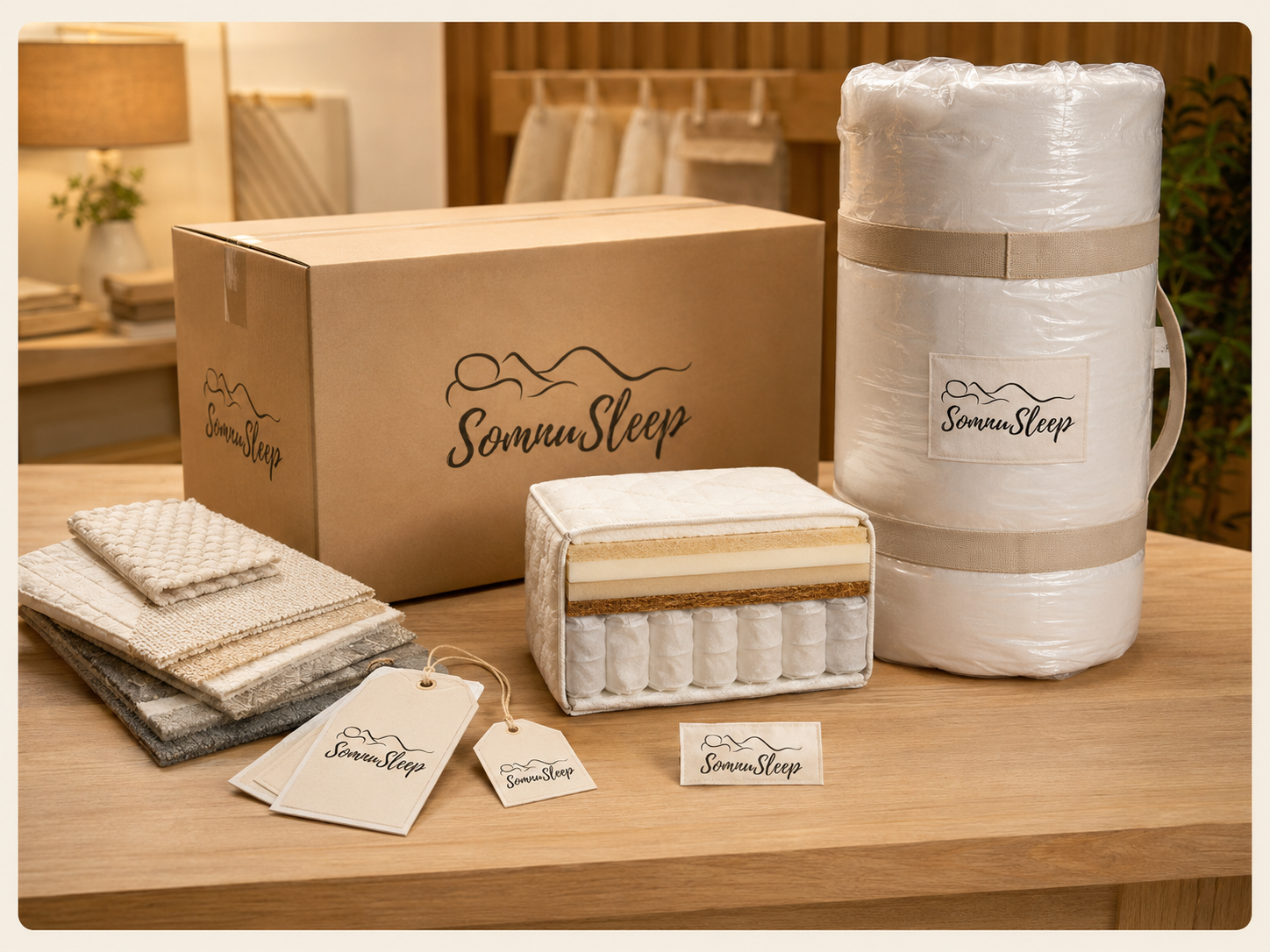
1. Why Mattress Specifications Matter Before Bulk Ordering
A general request such as “queen size, medium firm” is usually not enough to define a mattress for quotation, sampling and bulk production. Buyers should provide a clearer product specification so the required construction and finished product can be understood consistently.
The specification becomes the reference point for product development, sample approval and production. It should describe the main product requirements clearly enough for both the buyer and supplier to confirm what is being developed.
Key takeaway: A mattress specification should describe the product clearly enough to be quoted, sampled, approved and reproduced for the order.
Clear specifications help suppliers understand what product should be quoted.
The agreed requirements provide a reference for developing and reviewing the sample.
Buyers can compare the finished sample against the confirmed construction, dimensions, materials and appearance.
The approved specification helps define the product that should move into repeat production.
Buyer note: A specification is not only a purchasing document. It also becomes an important reference during sampling, approval and production.
2. How Should Buyers Define the Mattress Construction?
Mattress construction should be described by more than a general product name. Buyers should identify the main support system, comfort-layer direction and top construction so the supplier understands how the finished mattress should be built.
Support system and top construction describe different parts of the mattress. For example, a pocket spring mattress may use a Tight Top, Euro Top or Pillow Top profile, while a foam mattress uses a spring-free support structure.
Support System
This describes the main structure that supports the mattress.
Spring-free construction using selected foam layers for support and comfort.
Individually wrapped springs form the main support core.
Pocket springs are combined with selected foam, latex or other comfort materials.
Top Construction
This describes how the upper mattress surface and comfort section are finished.
Comfort layers are integrated directly beneath the quilted top
An additional comfort section is built within the mattress edge profile.
A visibly separate comfort section is attached above the main mattress body.
Specification example: Pocket spring support system + selected foam comfort layers + Euro Top profile + finished height and firmness direction confirmed.
Need help comparing support systems? Read our Pocket Spring vs Foam Mattress Buyer’s Guide.
3. What Size, Height and Firmness Should Buyers Confirm?
Size, finished height and firmness are basic mattress specifications, but they should be defined more clearly than a general product name or comfort description. Buyers should confirm the actual dimensions, target-market requirements and intended comfort direction before sample development.
01 — Mattress Size
Confirm the required width and length, the target-market size standard and whether any custom dimensions are needed.
02 — Finished Height
Confirm the finished mattress height rather than only the thickness of individual foam, spring or comfort layers.
03 — Firmness Direction
Firmness depends on the total construction, including support system, foam layers, quilting and comfort materials.
Buyer note: Mattress size standards and regulatory requirements can vary by destination market. Buyers should confirm the applicable dimensions and requirements for the intended market.
4. What Comfort Layers and Spring Specifications Should Buyers Define?
Buyers should define the main materials and support components that affect the finished mattress construction. The level of detail required depends on the product, but the specification should clearly identify the materials and structural elements that need to be confirmed.
Foam & Comfort Layers
Foam specifications should describe the materials used, their position in the mattress and the required layer structure rather than simply stating “foam mattress” or “memory foam.”
Confirm whether the layer uses memory foam, PU foam, latex or another specified material.
Record the required thickness for each relevant comfort or support layer.
Confirm density only when it is part of the agreed product specification.
Define the order of the materials from the comfort surface to the support structure.
Spring System
For spring-based mattresses, buyers should identify the required spring structure and any related support details that are important to the finished product.
Confirm whether the specification uses pocket springs or another agreed spring system.
Record spring height when it is relevant to the mattress construction.
Confirm any zoned support requirement only when it forms part of the approved specification.
Define whether the mattress requires a specific perimeter or edge-support construction.
Buyer note: Do not add technical values such as foam density, coil count or wire gauge unless they are genuinely required and confirmed for the product specification.
5. What Fabric, Quilting and Cover Details Should Buyers Confirm?
Mattress appearance and surface construction should be included in the specification when they affect the approved product. Buyers should confirm the required fabric, quilting and finishing details rather than relying only on a reference image.
The exact options depend on the mattress construction and product design. Features such as removable covers, zippers, handles or non-slip materials should only be specified when they are actually required for the product.
Buyers developing branded products can review SomnuSleep’s mattress customization options for fabric, quilting and product-detail requirements.
Confirm the required cover material and surface appearance.
Record the required color, pattern or visual direction when relevant.
Confirm the quilting pattern and surface construction required for the finished mattress.
Define any side-panel or border-fabric requirement.
Confirm whether the design uses a fixed or removable cover, if applicable.
Specify zippers, handles, non-slip materials or other details only when required.
Buyer note: Not every mattress construction supports the same cover or finishing options. Final details should be confirmed against the actual product design.
6. What Branding, Labels and Packaging Should Buyers Confirm?
Branding, labeling and packaging should be confirmed as part of the product specification rather than added only after the mattress itself has been approved. Buyers should define the required brand presentation, product information and final packaging format before bulk production.
Branding & Labels
Private-label and branded mattress projects may require different product-identification details depending on the target market, sales channel and buyer requirements.
Confirm the required logo placement and overall brand presentation.
Define woven labels, product labels or other identification details when required.
Confirm any care, product-information or market-required labels applicable to the destination.
Record barcode, instruction card or other product-information requirements where applicable.
Packaging
The packaging specification should describe how the finished mattress will be protected, handled and presented for the intended distribution channel.
Confirm whether the mattress will use flat packing, compression, roll-pack or another approved format.
Define carton dimensions, carton printing and product-identification details when required.
Confirm logos, graphics, labels and other brand elements required on the final package.
Review the final packaging format together with the approved mattress specification before production.
Buyer note: Buyers planning compressed or boxed products can also review our mattress compression and packaging guide for packaging approval and bulk-shipping considerations.
7. Mattress Specification Table: What Buyers Should Confirm
A mattress specification sheet should bring the main product requirements together in one place. The exact level of detail depends on the project, but buyers can use the following areas as a practical reference before quotation, sampling and bulk production.
| Specification Area | What Buyers Should Confirm |
|---|---|
| Construction | Main support system, comfort-layer direction and top construction. |
| Mattress Size | Required width, length, target-market size standard and any custom dimensions. |
| Finished Height | Overall finished mattress height rather than only individual layer thicknesses. |
| Firmness | Target firmness or comfort direction based on the agreed total construction. |
| Comfort Layers | Material type, required thickness, layer sequence and density where genuinely required. |
| Spring System | Spring type, height, zoning or edge-support requirements when applicable. |
| Fabric | Cover material, color, pattern and other required surface details. |
| Quilting & Finish | Quilting design, border construction, cover style and other approved finishing details. |
| Branding | Logo placement, brand presentation and any private-label product details. |
| Labels | Product labels, care information, barcode and market-required labeling where applicable. |
| Packaging | Packaging format, carton requirements, product identification and branding details. |
| Sample Approval | Final approved construction, dimensions, materials, appearance, branding and packaging before bulk production. |
8. What Should Buyers Approve in the Mattress Sample?
A mattress sample should be reviewed against the agreed specification rather than judged only by its overall appearance or feel. Before bulk production, buyers should confirm that the sample matches the required construction, dimensions, materials, branding and packaging direction.
Any approved changes should be reflected in the final product specification so the confirmed sample and production requirements remain aligned.
Key point: The approved sample should represent the product specification that will move into bulk production.
Confirm the approved support system and overall build.
Check mattress width, length and finished height.
Confirm the agreed comfort direction against the approved construction.
Review cover material, quilting pattern and surface appearance.
Confirm the agreed comfort layers and support components.
Check logo placement, product labels and required identification details.
Confirm the approved packaging format, carton and product information.
Review the finished mattress against the approved product direction.
Buyers reviewing how approved specifications move into production can also explore SomnuSleep’s factory and production capabilities.
9. Mattress Specification Checklist Before Bulk Production
Before approving bulk production, buyers should confirm that the mattress specification, approved sample and packaging requirements are aligned. This checklist can be used as a final review before the order moves into production.
Product & Construction
Materials & Branding
Approval & Delivery
Final check: The approved sample, written specification and packaging requirements should describe the same product before bulk production begins.
Planning a Wholesale or Private-Label Mattress Project?
Share your target market, mattress construction, size, height, firmness, materials, branding and packaging requirements with our team.
We can help review the product direction and specification before sample development and bulk production.